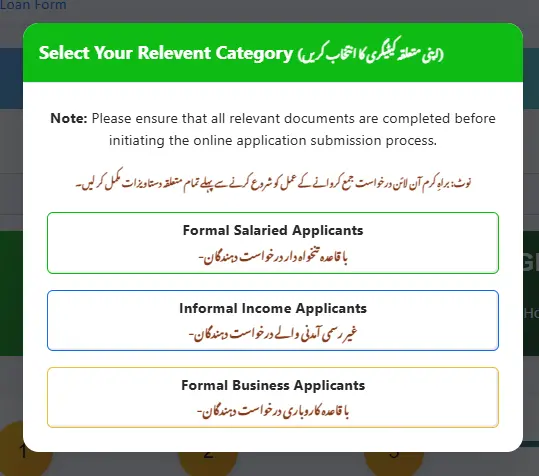
Quick Summary: For the PM Apna Ghar Programme (federal): CNIC + 6 months salary slips/bank statements + property documents + 10% equity proof + reference letters. For Apni Chhat Apna Ghar (Punjab ACAG): CNIC + spouse CNIC + B-Forms + Fard/Registry + possession proof + Rs 200 affidavit + NSER PMT proof + photographs. All documents must be scanned clearly under 1 MB per file for ACAG and 2 MB per file for the federal scheme. Document mismatches and blurry scans are the #1 reason applications get rejected, gather everything before you start.
The fastest way to fail an Apna Ghar application isn't ineligibility, it's submitting it with one document missing or one scan unreadable. Phase 1 ACAG analysis showed roughly 22% of rejections were document-related, and a further 15% were "delays leading to closure" because applicants didn't respond to "Action Required" requests within the 15-day window. Both are entirely preventable with one hour of preparation.
This is the most thorough Apna Ghar document checklist you'll find, covering both the federal PM Apna Ghar Programme and the Punjab ACAG/AZAG schemes, organized by applicant scenario (salaried, self-employed, NRP, widow, joint family), with the exact affidavit wording the portal accepts, document size limits, and the common scan-quality mistakes that get applications rejected.
Quick Reference: Documents at a Glance
| Document | PM Apna Ghar (Federal) | ACAG (Punjab) | AZAG (Free Plot) |
|---|---|---|---|
| CNIC (front + back) | ✅ Required | ✅ Required | ✅ Required |
| Spouse CNIC | ✅ If married | ✅ If married | ✅ If married |
| B-Form (children) | ✅ If applicable | ✅ If applicable | ✅ If applicable |
| Property Document | ✅ Required | ✅ Required (own plot) | ❌ N/A (you're landless) |
| Possession Proof | ✅ Required | ✅ Required | ❌ N/A |
| Income Proof (salary/bank) | ✅ 6,12 months | ✅ Recent | ✅ Recent |
| Employer Letter | ✅ If salaried | Optional | Optional |
| NSER / PMT Score Proof | ❌ Not required | ✅ Required (≤60) | ✅ Required (≤60) |
| Domicile Certificate | Optional | Optional | ✅ Required |
| Rs 200 Affidavit | ✅ Required | ✅ Required | ✅ Required |
| Equity Proof (10%) | ✅ Required | ❌ N/A | ❌ N/A |
| Reference Letters | ✅ 2 references | ❌ N/A | ❌ N/A |
| Photographs (2,4) | ✅ Required | ✅ Required | ✅ Required |
| Bank Account Details | ✅ Required | Optional | ✅ For disbursement |
| Utility Bill | Optional | ✅ Recent (3 months) | ✅ Recent (3 months) |
| NTN | ✅ If self-employed | Optional | Optional |
| Police Clearance Certificate | ❌ Not required | ✅ If asked at verification | ✅ Required |
Document File Specifications
Before scanning, know exactly what the portals will accept. Files outside these specs get auto-rejected at upload.
| Specification | PM Apna Ghar (Federal) | ACAG / AZAG (Punjab) |
|---|---|---|
| Max File Size | 2 MB per file | 1 MB per file |
| Accepted Formats | PDF, JPG, JPEG, PNG | PDF, JPG, JPEG, PNG |
| Resolution | Minimum 300 DPI | Minimum 300 DPI |
| Color | Color or black-and-white | Color preferred |
| Filename Format | Letters, numbers, hyphens | Letters and numbers only, no special characters |
| CNIC Scan | Both sides on single PDF | Both sides on single PDF |
Critical: ACAG's 1 MB per file limit is strict. Use a free compressor like iLovePDF.com/compress_pdf or CompressJPEG.com before uploading. Phone-camera photos saved as JPGs are typically 4,6 MB and fail at upload.
Section 1: Identity Documents (All Schemes)
CNIC of Applicant
Required: Yes, for all three schemes.
Format:
- Front and back of your Computerized National Identity Card
- Must be valid and unexpired at time of application
- Both sides combined into a single PDF or JPG
- Clear, readable, no fingers covering text
Common Mistake: Submitting expired CNIC. If yours is within 30 days of expiry, renew it at NADRA first before applying. The portal cross-checks expiry dates with NADRA.
Spouse CNIC (If Married)
Required: Yes if you're married, for all three schemes.
Why: The system cross-checks both spouses' property holdings. Many applicants are rejected because their spouse owns property the applicant didn't disclose.
Format: Same as your own CNIC, front and back, clear scan, single file.
B-Forms for Children
Required: If you have unmarried children under 18, for ACAG and AZAG.
Why: Confirms household size for PMT score calculation. Larger families typically have lower PMT scores.
Where to Get: From NADRA, same office that issues CNICs. Costs Rs 50 per child, takes 1 day for normal service.
Family Registration Certificate (FRC)
Required: Yes for AZAG; optional for ACAG (but recommended).
Why: Confirms you are the head of family per NADRA records, a hard requirement for both Punjab schemes.
Where to Get: Apply via NADRA's Pak-Identity online portal or visit any NADRA Mega Centre. Costs Rs 100, available within 1,2 days.
Section 2: Property Documents (ACAG and Federal Only)
You only need property documents for schemes where you're financing or building on a plot. AZAG is for landless families, do not submit property documents if applying for the free plot scheme.
Land Ownership Document
Required: Yes for ACAG and federal schemes (where you have/will have land).
Acceptable Documents (any one):
- Registry / Sale Deed, Issued at time of purchase, shows direct transfer of ownership. The strongest form of proof.
- Fard (Land Ownership Record), Extract from Patwari's records. Get from your local Tehsil/Patwari office. Most common ACAG document.
- Intiqal (Mutation Certificate), Confirms ownership has been formally transferred and recorded. Required if you inherited the land or it's been transferred.
- Allotment Letter, From a development authority (LDA, RDA, FDA, Cantt Board, DHA) for plots in formal housing schemes.
Where to Get / Verify:
- Visit your District Patwari for Fard
- Punjab Land Records Authority (PLRA), verify records online at zameen.lro.punjab.gov.pk
- For housing-scheme plots, contact the relevant development authority
Common Mistakes:
- Submitting an old Fard (must be issued within last 6 months)
- Mismatch between names on different documents
- Land registered in family member's name, not yours
Possession Document (Patwari Letter)
Required: Yes for ACAG.
Why: Proof you physically have the plot, not just the paper title. PHATA's field verification (Patwari visit) cross-checks this.
Where to Get: Your local Patwari issues a possession letter on request. Some Patwaris ask for an unofficial fee, do not pay. The letter is free and you can request it through your Tehsildar's office formally if the Patwari refuses.
NOC / Approved Building Plan
Required: For federal scheme construction loans only.
What: No Objection Certificate from the relevant municipal authority confirming you can build on the plot, plus an approved architectural plan if you're constructing.
Where to Get: Local development authority or Tehsil Municipal Authority.
Section 3: Income & Financial Documents
For Salaried Applicants
PM Apna Ghar (Federal):
- Last 6 months' salary slips (signed and stamped by employer)
- Last 12 months' bank statements showing salary credits
- Employer letter confirming employment, designation, and salary
- Bank account proof (account opening certificate or recent statement header)
ACAG (Punjab):
- Last 1,3 months' salary slips (recent is sufficient)
- Bank statement (last 3 months, optional but recommended)
- Employer letter (optional, accepts salary slip alone for low-income workers)
For Self-Employed Applicants (Business Owners / Shopkeepers)
PM Apna Ghar (Federal):
- Last 12 months' business bank statements
- Business registration certificate (Form C / Partnership deed / SECP registration)
- NTN certificate issued by FBR
- Recent tax returns (last 1,2 years)
- Self-declaration of income on letterhead with stamp
ACAG (Punjab):
- Self-declaration affidavit of monthly income (Rs 200 e-stamp paper)
- Recent business documents if available
- Bank statement (optional, last 3 months)
For Daily Wage / Informal Workers
ACAG (Punjab), Most Relevant:
- Self-declaration affidavit stating monthly income (Rs 200 e-stamp paper)
- Reference from local Numberdar / Lambardar confirming employment status (optional but strengthens case)
- No formal salary slip required, ACAG is designed to accept self-declarations from informal workers
The federal scheme generally does not approve loans to applicants without verifiable formal income, informal-income applicants should focus on ACAG.
For Pensioners
- Last pension book / pension order copy
- Bank statement showing recent pension credits
- Pension certificate from the issuing department
For Non-Resident Pakistanis (NRPs), Federal Only
- NICOP (front and back)
- Roshan Digital Account (RDA) statement from a participating bank
- Foreign income proof, salary slips, employment contract, foreign tax returns
- Authorization letter appointing a local representative in Pakistan (optional)
Section 4: NSER & PMT Score Documents (Punjab Schemes Only)
Required: Yes for ACAG and AZAG.
The NSER record is the most critical document for Punjab schemes. The portal automatically cross-checks your CNIC against NSER and rejects applications with PMT scores above 60.
What to Provide
You don't physically upload an NSER document, the system pulls it automatically from BISP's database. However, before you apply, you should:
- SMS your CNIC to 8171 to confirm your current PMT score
- If score is above 60, visit BISP Tehsil Office for re-survey first
- If your CNIC isn't found, register via NSER survey at BISP office
NSER-Related Documents to Bring (At BISP Tehsil Office)
If you need to update or register your NSER record before applying for ACAG:
- CNIC (and spouse's)
- B-Forms for children
- FRC from NADRA
- Recent utility bills (electricity, gas, last 3 months)
- Income proof or self-declaration
- Death certificates for any deceased family members
- Disability certificate if applicable
For more on PMT score verification and re-survey, see our companion guide on PMT Score Check for Apna Ghar.
Section 5: The Rs 200 Affidavit (All Schemes)
Required: Yes for all three schemes.
This is the most under-explained document in the niche. Most competitor sites just say "submit an affidavit" without telling you what it should say or where to get the template.
What the Affidavit Must State
The affidavit is a sworn declaration on Rs 200 e-stamp paper confirming:
- You and your immediate family do not own any other residential property in Pakistan
- The information in your application is true, accurate, and complete
- You will use the loan/plot only for residential purposes for yourself and your family
- You agree to return the loan in instalments as per scheme terms (for ACAG)
- You will comply with all program Terms of Reference (TORs)
Affidavit Template (Standard Format)
AFFIDAVIT
I, [Full Name as on CNIC], son/daughter/wife of [Father/Husband Name], holder of CNIC No. [13-digit CNIC], resident of [Permanent Address], do hereby solemnly affirm and declare on oath as under:
1. That I am a permanent resident of the Province of Punjab and a citizen of Pakistan.
2. That I am applying for the [Apni Chhat Apna Ghar / Apni Zameen Apna Ghar / PM Apna Ghar Programme] scheme launched by the Government.
3. That neither I, nor my spouse, nor my dependent children own any other residential house or plot anywhere in Pakistan, except as declared in my application.
4. That all the information provided by me in the application form and supporting documents is true, accurate, and complete to the best of my knowledge.
5. That I am not a defaulter of any bank or financial institution and have no criminal record or anti-state activity registered against me.
6. That I undertake to use the loan/plot strictly for the residential purpose of building a home for myself and my family.
7. That I shall comply with all the Terms of Reference (TORs) of the scheme, including the construction timeline and non-transferability conditions.
8. That if any of the above information is found to be incorrect, my application/allotment may be cancelled and I shall be liable for legal action.
DEPONENT
[Signature] [Name] [CNIC] [Date]
Verified at: [City] On: [Date]
(Verified before the Oath Commissioner)
Where to Get the Affidavit Made
- Visit any Oath Commissioner / Stamp Vendor at your nearest District Court or Tehsil Court
- Buy Rs 200 judicial e-stamp paper (also called "Rs 200 ki e-stamp")
- Provide the affidavit text (use the template above)
- Get it typed by a court stenographer (usually charges Rs 50,100)
- Sign it before the Oath Commissioner who will affix their stamp and signature
- Pay the Oath Commissioner's nominal fee (usually Rs 100,200)
Total cost: Rs 350,500 including stamp paper, typing, and Oath Commissioner fees.
Where to Avoid Using: The portal's "official template", most competitors say there's a downloadable template on the portal. Sometimes it's there, sometimes it isn't. The standard text above is universally accepted.
Section 6: Photographs and Supporting Documents
Photographs
Required: Yes, 2 to 4 recent passport-size photographs.
Specifications:
- Size: Passport size (35mm × 45mm)
- Background: White or blue (not patterned, not gradient)
- Recency: Taken within the last 6 months
- Quality: Clear face, both ears visible, no sunglasses or hat (unless religious)
- Format: JPG or PNG file under 500 KB each (when scanned)
Utility Bill (Punjab Schemes)
Required: Yes for ACAG and AZAG.
Acceptable bills:
- Electricity bill (LESCO / GEPCO / FESCO / IESCO / MEPCO etc.)
- Gas bill (SNGPL / SSGC)
- Water bill (Municipal / WASA)
Specifications:
- Most recent bill (within last 3 months)
- Should be in your name OR a family member's name with your address
- If utility is in landlord's name, include a separate rent agreement to establish residency
Police Clearance Certificate (PCC)
Required: Yes for AZAG; sometimes asked at verification stage for ACAG.
Where to Get:
- Visit your District Police Office or Police Khidmat Markaz
- Submit application with CNIC and Rs 100 fee
- Available within 5,10 working days
- Some districts now offer this online via citizenpolice.punjab.gov.pk
Bank Account Details
Required: For PM Apna Ghar (mandatory) and AZAG (for plot allotment communication and any future ACAG disbursement).
What to Provide:
- Account number / IBAN
- Bank name and branch
- Account opening certificate (for federal scheme)
- Recent bank statement showing account is active
Section 7: Reference Letters (Federal Scheme Only)
Required: Yes, 2 reference letters for PM Apna Ghar Programme (federal).
The reference letter requirement is unique to the federal scheme, Punjab ACAG/AZAG don't ask for it.
Reference 1: Personal Reference
A letter from a person who has known you for at least 3 years, typically a relative, neighbour, or family friend. Should include:
- Their CNIC
- Their full address and contact
- Their relationship to you and how long they've known you
- A statement vouching for your character and integrity
- Their signature
Reference 2: Professional Reference
A letter from a professional acquaintance, supervisor, business associate, banker, or employer. Should include:
- Their CNIC and professional contact
- Their relationship to you (employer, business contact, etc.)
- A statement vouching for your financial reliability and professional conduct
- Their company stamp (if applicable)
Common Format: Available at most banks' websites (Allied Bank, Bank Alfalah have standard reference forms).
Document Checklist by Applicant Scenario
Different applicants need different document sets. Here's the targeted checklist by your specific situation:
Scenario A: Salaried Government Employee, Punjab Resident, Owns 5-Marla Plot
Most likely scheme: Apni Chhat Apna Ghar (ACAG)
Documents Needed:
- [ ] CNIC (front + back)
- [ ] Spouse CNIC (if married)
- [ ] B-Forms (if children)
- [ ] FRC from NADRA
- [ ] Fard / Registry of plot (issued within last 6 months)
- [ ] Possession proof (Patwari letter)
- [ ] Recent salary slip (1,3 months)
- [ ] Employer letter (optional)
- [ ] NSER PMT score proof (auto-pulled by portal)
- [ ] Rs 200 affidavit (Oath Commissioner attested)
- [ ] 2 passport-size photos (white background)
- [ ] Recent utility bill (last 3 months)
- [ ] Bank account details
Scenario B: Self-Employed Shopkeeper, Punjab Resident, Owns Small Plot
Most likely scheme: ACAG (if PMT below 60) OR Federal PM Apna Ghar (if income above Rs 60K)
Documents Needed:
- [ ] CNIC (front + back)
- [ ] Spouse CNIC (if married)
- [ ] B-Forms (if children)
- [ ] FRC from NADRA
- [ ] Property document (Fard / Registry / Intiqal)
- [ ] Possession proof
- [ ] Self-declaration of income on Rs 200 e-stamp paper
- [ ] Last 12 months' business bank statements (for federal scheme)
- [ ] NTN certificate (for federal scheme)
- [ ] Tax return copies (for federal scheme)
- [ ] NSER PMT proof (for ACAG)
- [ ] Rs 200 affidavit
- [ ] 2,4 passport-size photos
- [ ] Recent utility bill
- [ ] Bank account details
Scenario C: Landless Daily-Wage Worker
Most likely scheme: Apni Zameen Apna Ghar (AZAG), free 3-marla plot
Documents Needed:
- [ ] CNIC (front + back)
- [ ] Spouse CNIC (if married)
- [ ] B-Forms (if children)
- [ ] FRC from NADRA
- [ ] Domicile certificate (district)
- [ ] No property document needed (you're landless)
- [ ] Self-declaration of income (Rs 200 stamp)
- [ ] NSER PMT score (must be ≤60)
- [ ] Police Clearance Certificate
- [ ] Rs 200 affidavit (with specific landless declaration)
- [ ] 2,4 passport-size photos
- [ ] Recent utility bill (or rent agreement)
Scenario D: NRP / Overseas Pakistani
Most likely scheme: Roshan Apna Ghar (federal NRP track)
Documents Needed:
- [ ] NICOP (front + back, scanned)
- [ ] Roshan Digital Account statement
- [ ] Foreign income proof (salary slip / employment contract)
- [ ] Foreign tax return (if applicable)
- [ ] Property document (if buying in Pakistan)
- [ ] Authorization letter for local representative (optional)
- [ ] Affidavit (notarized at Pakistani consulate or via Apostille)
- [ ] 2 photographs
Scenario E: Widow / Single Female Head of Family
Most likely scheme: ACAG (Punjab), priority category
Documents Needed:
- [ ] CNIC (front + back)
- [ ] Husband's death certificate (NADRA-issued)
- [ ] B-Forms for unmarried children
- [ ] FRC showing you as head of family
- [ ] Property document (if applying for ACAG construction loan)
- [ ] Self-declaration of income (Rs 200 stamp)
- [ ] NSER PMT score (must be ≤60)
- [ ] Rs 200 affidavit
- [ ] 2 passport-size photos
- [ ] Recent utility bill
- [ ] Special note in application: "Widow / Female Head of Family" (priority category)
Scenario F: Joint Family (2026 Update)
Most likely scheme: ACAG, joint family expansion (Jan 2026)
Documents Needed:
- [ ] CNIC of head of joint family
- [ ] CNICs of all earning members of joint family
- [ ] FRC showing joint family structure
- [ ] Joint family consent letter (signed by all adult members)
- [ ] Property document of existing house
- [ ] Possession proof
- [ ] Income proof of head and contributing members
- [ ] NSER PMT proof (joint family score)
- [ ] Rs 200 affidavit (mentioning joint family structure)
- [ ] Construction plan for floor/room addition
- [ ] 2,4 passport-size photos
Document Submission Best Practices
After analyzing thousands of rejection patterns, these are the practices that materially increase approval chances:
Scanning Quality
- Use a dedicated scanning app like Microsoft Lens or Adobe Scan, not just your phone camera
- Scan in 300 DPI minimum (Microsoft Lens default is fine)
- Use Document mode, not "Photo" mode
- Ensure even lighting, avoid shadows
- Scan one document per file unless instructed otherwise (CNIC front+back can be combined)
File Naming
Use clear filenames the portal will accept:
- ✅
CNIC-Front-Back.pdf - ✅
Property-Fard-2026.jpg - ✅
Salary-Slip-March-2026.pdf - ❌
मेरा CNIC.pdf(special characters) - ❌
IMG_20260501_134523.jpg(auto-generated, hard to verify) - ❌
CNIC (1).pdf(parentheses sometimes rejected)
File Size Compression
Use iLovePDF.com or CompressJPEG.com to reduce file sizes:
- For PDF: 1MB target → "High Compression" setting
- For JPG: 1MB target → 80% quality is usually sufficient
- Test the compressed file is still readable before uploading
Backup Everything
Before submitting, save copies of every document on:
- Your phone (cloud-synced, Google Drive / iCloud)
- A USB drive
- Email to yourself as a backup
If your application is questioned later or you need to re-apply, having the same documents speeds up the second attempt.
Common Document Mistakes That Cause Rejection
After analyzing Phase 1 rejections, here are the avoidable mistakes that took thousands of applicants out:
1. Expired CNIC, Renew at NADRA before applying. Check your CNIC expiry date now.
2. Old Fard, Get a fresh Fard from your Patwari (issued within last 6 months). Old Fards are auto-rejected.
3. Property in spouse's name, Apply through whichever spouse has clear ownership; submitting under the wrong name causes mismatch rejection.
4. Affidavit with wrong wording, Use the standard template above. Self-written affidavits get rejected for incorrect format.
5. Photographs with patterned background, Plain white or blue only. Studio photo with brown gradient = rejected.
6. Salary slip on plain paper, Must be on company letterhead with employer signature and stamp.
7. Bank statement without account holder name, The first page must show your full name and CNIC. Some online statements omit this.
8. Utility bill in landlord's name only, Get a rent agreement to establish your residency at the address.
9. NTN certificate expired or unverified, Verify NTN status at FBR's online portal before submitting.
10. Document file too large, Compress to under 1 MB (ACAG) or 2 MB (federal) before uploading.
11. Filename with special characters, Use only English letters, numbers, and hyphens.
12. Death certificate without NADRA verification, Death certificate must be issued/verified by NADRA, not just hospital-issued.
13. Multiple documents in one PDF, Each document type needs its own file (except CNIC front/back which goes together).
14. Black-and-white scan of color document, While most documents accept B&W, the federal scheme prefers color scans of CNIC and property documents.
15. Photographs taken with hat or sunglasses, Remove all face coverings except religious head covering for women.
Frequently Asked Questions
- NOC from co-owner confirming you can use the property as security
- The application should be submitted in the name of the person who will live in the constructed home
- ACAG's joint family update (Jan 2026) makes this easier, both brothers can apply together for floor expansion
- CNIC, duplicate from NADRA
- B-Form, re-issued from NADRA
- Fard, re-issued by Patwari
- NTN, print from FBR portal
- Affidavit, get a fresh one from Oath Commissioner
- Original CNIC (only scans for online; originals only for in-person verification)
- Bank ATM card / passwords / OTPs
- Documents from family members unless specifically required (their property records, etc.)
- Forged or altered documents, automatic disqualification and possible criminal charges
For PM Apna Ghar (federal): Your CNIC + 6 months' income proof + 10% equity proof are the three pillars. For ACAG (Punjab): Your CNIC + property document + NSER PMT score (must be ≤60) are the three pillars. Missing any of these is an instant rejection.
The Fard should be issued within the last 6 months. PHATA's verification cross-checks Patwari records and rejects applications with older Fards because property records can change.
Visit any District or Tehsil Court and find an Oath Commissioner or stamp vendor. Buy Rs 200 e-stamp paper (Rs 200), get the affidavit typed (Rs 50,100), and have the Oath Commissioner attest it (Rs 100,200). Total cost: Rs 350,500.
No. Renew your CNIC at NADRA first. The portal cross-checks expiry dates and rejects expired CNICs immediately. Renewal at NADRA takes 1 day for urgent service.
For ACAG (Punjab), you can submit a self-declaration of income on Rs 200 e-stamp paper. Daily-wage workers and informal-sector earners are explicitly accepted by ACAG. For the federal scheme, you need verifiable formal income (salary slip / business records / tax returns).
For online application: No, all documents are uploaded digitally to the portal. Physical submission may be required at the verification stage (PHATA Field Office or DC Office), where you bring originals for inspection.
You can still apply, but you'll need:
No, for online application, you submit digital scans (PDF/JPG/PNG). Photocopies are only relevant if you're applying offline at a DC Office, where staff will scan them for you.
Permanently. PHATA or the bank may request originals at any verification stage during the application process and even after disbursement. Keep all originals in a safe location for at least the duration of the loan repayment.
Most documents can be re-issued: If you lose your Tracking ID after submission, log into the portal, it's also stored in your dashboard.
Don't submit:
Yes, see the printable checklist section below. Save the page as PDF or print for reference.
Largely yes, but the federal scheme requires stronger income proof and 10% equity that ACAG doesn't. ACAG requires NSER PMT verification that the federal scheme doesn't. The CNIC, property, and affidavit requirements are similar across both.
Update your NADRA records to reflect marriage status before applying. Submit your marriage certificate to NADRA, your B-Form can then be replaced with your spouse-linked B-Form for any children of the marriage.
The official ACAG portal at acag.punjab.gov.pk has a "Documents Required" section that lists current requirements. The federal portal at apnaghar.gov.pk has bank-specific document lists per participating bank. Always check the latest list on the official portal, requirements occasionally change.
Printable Apna Ghar Document Checklist
Save this checklist or print it for the BISP, DC Office, or partner bank visit:
For PM Apna Ghar (Federal):
- [ ] CNIC of applicant (front + back)
- [ ] Spouse CNIC (if married)
- [ ] B-Forms for children under 18
- [ ] FRC from NADRA
- [ ] Property document (Sale Deed / Registry / Allotment Letter)
- [ ] Approved building plan (if construction)
- [ ] Last 6 months' salary slips OR last 12 months' bank statements
- [ ] Employer letter (if salaried)
- [ ] Business registration & NTN (if self-employed)
- [ ] Recent tax returns (if self-employed)
- [ ] 10% equity proof (bank statement showing amount)
- [ ] 2 reference letters (1 personal + 1 professional)
- [ ] Rs 200 affidavit (Oath Commissioner attested)
- [ ] 2,4 passport-size photos (white/blue background)
- [ ] Bank account details / IBAN
For ACAG (Punjab Apni Chhat Apna Ghar):
- [ ] CNIC of applicant (front + back)
- [ ] Spouse CNIC (if married)
- [ ] B-Forms for children under 18
- [ ] FRC from NADRA
- [ ] Property document (Fard / Registry / Intiqal, issued within 6 months)
- [ ] Possession proof (Patwari letter)
- [ ] Salary slip OR self-declaration of income (Rs 200 stamp)
- [ ] NSER PMT score below 60 (verified via 8171 SMS)
- [ ] Rs 200 affidavit (Oath Commissioner attested)
- [ ] 2,4 passport-size photos
- [ ] Recent utility bill (last 3 months)
- [ ] Bank account details (optional)
For AZAG (Punjab Apni Zameen Apna Ghar, Free Plot):
- [ ] CNIC of applicant (front + back)
- [ ] Spouse CNIC (if married)
- [ ] B-Forms for children under 18
- [ ] FRC from NADRA
- [ ] Domicile certificate of district (CNIC must match)
- [ ] No property documents (you must be landless)
- [ ] Self-declaration of income (Rs 200 stamp)
- [ ] NSER PMT score below 60
- [ ] Police Clearance Certificate
- [ ] Rs 200 affidavit (with specific landless declaration)
- [ ] 2,4 passport-size photos
- [ ] Recent utility bill (or rent agreement if no utility in your name)
- [ ] Bank account details (for plot communication)
Final Word: Spend One Hour on Documents to Save 8 Weeks
The single biggest predictor of Apna Ghar approval isn't your income or PMT score, it's whether you submitted complete, properly-formatted documents the first time. Applications with all documents in order move through the verification pipeline 3,4× faster than applications with even one missing item.
One-hour preparation checklist:
- 0,10 min: Check your CNIC expiry; if within 30 days, renew before doing anything else
- 10,25 min: SMS your CNIC to 8171 to confirm PMT score; if above 60, plan a re-survey first
- 25,40 min: Scan all documents using Microsoft Lens or Adobe Scan in document mode
- 40,50 min: Compress files using iLovePDF / CompressJPEG to under 1 MB each
- 50,60 min: Visit Oath Commissioner for Rs 200 affidavit (skip if you already have one)
You're now ready to apply, and your application will land in the verification queue with zero red flags.
Federal portal: apnaghar.gov.pk Punjab ACAG portal: acag.punjab.gov.pk Punjab AZAG portal: azag.punjab.gov.pk Toll-free helpline: 0800-09100 FIA Cybercrime (fraud reports): 1991
Read our companion guides:
- PM Apna Ghar Programme, Complete Guide & Eligibility
- Apna Ghar Online Registration 2026, Form & Login
- Apni Chhat Apna Ghar Status Check by CNIC
- PMT Score for Apna Ghar, How to Check & How to Lower
- Apna Ghar Loan Calculator, Monthly Installments
Disclaimer: This article is informational only. Document requirements and acceptance specifications may be updated by the Government from time to time. Always verify current requirements on the official portals (apnaghar.gov.pk, acag.punjab.gov.pk, azag.punjab.gov.pk) before applying. The PM Apna Ghar Programme is administered by the State Bank of Pakistan and the Pakistan Housing Authority Foundation. The Punjab schemes (ACAG and AZAG) are administered by PHATA under the Government of Punjab. Information verified from official portals (May 2026), Punjab Government performance update (January 2026), and PM Office press release (30 April 2026).